
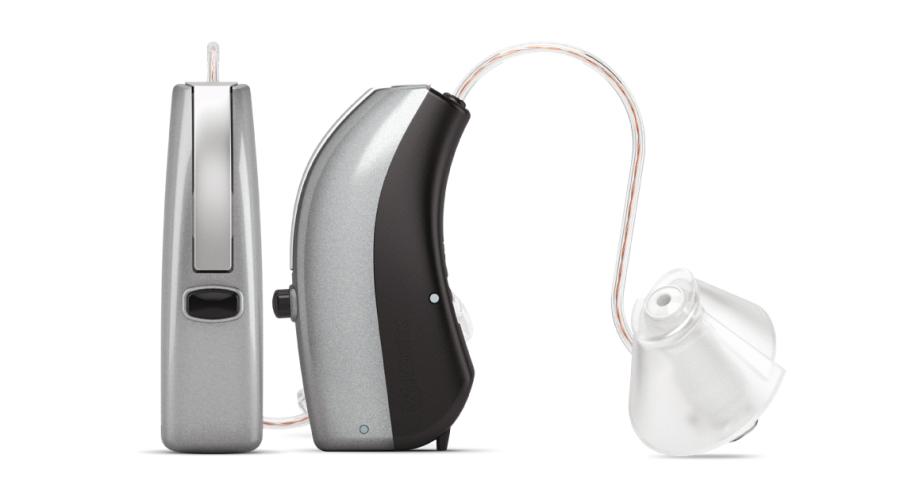
What is a hearing aid?
A hearing aid is an electro-acoustic device designed to make sounds more accessible for a person with hearing loss. Modern devices receive sound through a microphone, process and amplify it, then deliver the result to the ear through a receiver.
Hearing aids cannot restore normal hearing or correct every difficulty caused by hearing loss. Their purpose is to improve access to useful sound. The best results usually come from an up-to-date hearing test, professional fitting, realistic counselling and follow-up adjustments.
Common hearing-aid styles
Behind-the-ear (BTE)
A case sits behind the ear and connects to an ear mould or dome. BTE instruments cover a wide range of hearing losses and can provide power, reliability and flexible controls.
Receiver-in-the-ear (RITE/RIC)
The receiver or loudspeaker sits in the ear canal while the main instrument rests behind the ear. This allows a smaller case and an open, comfortable fitting for many users.
In-the-ear (ITE)
A custom instrument made to fit the outer ear. Controls and battery are housed inside the moulded shell.
In-the-canal (ITC)
A smaller custom style sitting partly inside the ear canal. It offers a more discreet appearance while retaining practical controls.
Completely-in-canal (CIC)
A very discreet custom aid positioned deeper in the ear canal. Suitability depends on the user’s hearing loss, ear anatomy and ability to handle a small device.
Bone-conduction solutions
Used where conventional air-conduction hearing aids are unsuitable, including some conductive or mixed hearing losses.
Analogue and digital technology
Earlier analogue instruments amplified sound using electronic circuitry and could be adjusted for different listening needs. Digitally programmable analogue aids later allowed settings to be controlled by computer.
Fully digital hearing aids convert sound into numbers, process it using a small computer and convert it back to audio. Programming can support different frequency responses, listening programmes, automatic adaptation, feedback reduction and background-noise management.
Depending on the model, digital devices may use multiple microphones for spatial hearing, frequency transposition, binaural coordination and wireless connection to telephones, televisions, personal music players, remote microphones and other equipment.
Indications and expectations
Hearing loss can reduce the brain’s regular access to sound and may affect the ability to distinguish speech, especially in noise. Simply making every sound louder is not always enough; the instrument must be fitted to the individual hearing pattern.
Successful use depends on the type and degree of hearing loss, speech understanding, the user’s communication environments, consistent use and appropriate rehabilitation. A hearing-care professional will explain the likely benefits and limitations.
Fitting and adjustment
The first fitting appointment is rarely the last. New users may notice the occlusion effect, unfamiliar loudness or differences in the way speech and environmental sounds are perceived. Regular use and follow-up tuning help the brain and the user adapt.
- Begin with a current audiogram and communication assessment.
- Select a style and technology level suited to hearing need and lifestyle.
- Programme and verify the response of the instrument.
- Provide instructions on insertion, cleaning, batteries or charging.
- Schedule follow-up visits for fine-tuning and maintenance.
Care, repairs and accessories
NigerBell provides hearing-aid programming, servicing and repairs as well as ear moulds, accessories and consumables. Regular cleaning, moisture protection and professional checks help preserve performance.