
Finding the appropriate solution
If you or someone you care about has hearing loss, a MED-EL or other suitable implant system may be considered. Implant systems are designed for different types and degrees of hearing loss. A hearing professional and implant team must assess the individual and advise on the appropriate option.
Cochlear implants
For individuals with severe-to-profound sensorineural hearing loss who receive limited benefit from appropriately fitted hearing aids.
Electric acoustic stimulation (EAS)
A combined electric and acoustic approach that may be considered for people with partial deafness and usable low-frequency hearing.
Middle-ear implants
An option for selected people with mild-to-severe sensorineural, conductive or mixed hearing loss.
Bone-conduction implants
For selected conductive and mixed hearing losses or single-sided deafness where bone-conduction access may be appropriate.
How a cochlear implant works
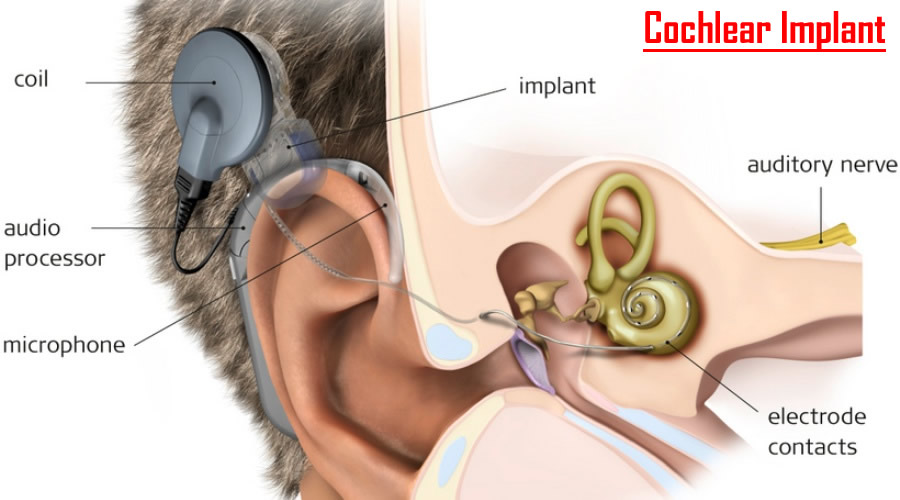
A cochlear implant does not work in the same way as a hearing aid. It converts sound into electrical signals and stimulates nerve fibres in the cochlea, allowing the recipient to perceive sound. An external audio processor captures and processes sound, while the implanted components deliver stimulation to the auditory system.
Who may benefit?
Cochlear implants are used successfully by children and adults in many countries. Exact benefit cannot be predicted for every person, but the following general considerations are important:
- Children with severe-to-profound sensorineural hearing loss in both ears may be assessed for implantation. Early access to sound is important for speech and language development.
- Adults with severe-to-profound sensorineural hearing loss may be considered when well-fitted hearing aids provide little or insufficient benefit.
- People with previous speech and language development often have a different rehabilitation pathway from those who have had profound loss from birth.
- A long period without useful auditory stimulation may affect expected outcomes.
- Education, family participation and access to habilitation or rehabilitation are essential parts of the process.
After implantation
Surgery is only one step. Activation, mapping, auditory training, speech and language therapy, equipment care and regular reviews help recipients learn to interpret the new sound information and work towards communication goals.
Important note
Information on this page is general and does not determine candidacy. A complete audiological, medical and communication assessment is required before an implant recommendation can be made.